RISE with SAP vs Traditional SAP Implementation: What’s the Difference?
Enterprise resource planning is no longer just about implementing software. Today, organizations want faster deployment, predictable costs, cloud flexibility, continuous innovation, and lower operational complexity. As businesses modernize their ERP landscape, one of the most common questions is whether to choose RISE with SAP vs Traditional SAP Implementation.
While both approaches help organizations run SAP ERP, they differ significantly in deployment, ownership, infrastructure, licensing, operations, and long-term business strategy. Choosing the right model depends on your organization’s digital transformation goals, IT capabilities, budget, and future growth plans.
This guide compares RISE with SAP vs Traditional SAP Implementation to help business leaders understand the advantages, challenges, and ideal use cases for each approach.
What Is RISE with SAP?
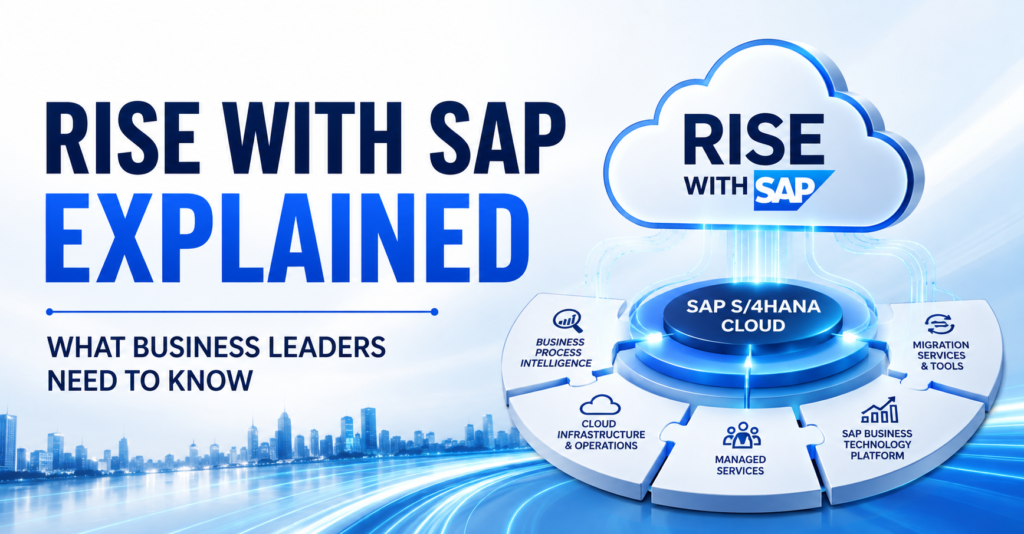
RISE with SAP is SAP’s business transformation offering that combines SAP Cloud ERP, cloud infrastructure, migration services, implementation methodology, and managed operations into a single subscription. It is designed to simplify ERP modernization and help organizations transition from legacy ERP systems to a cloud-first operating model. SAP positions it as an end-to-end transformation journey supported by standardized methodology, integrated tools, and expert guidance.
What Is Traditional SAP Implementation?
A traditional SAP implementation follows the conventional ERP deployment model where organizations purchase SAP licenses, select their preferred infrastructure, engage implementation partners, manage operations, and maintain the ERP environment internally or through separate service providers.
This approach provides greater control over the SAP landscape but also requires more responsibility for infrastructure, upgrades, security, and ongoing system administration.
RISE with SAP vs Traditional SAP Implementation: Side-by-Side Comparison
| Feature | RISE with SAP | Traditional SAP Implementation |
|---|---|---|
| Deployment Model | Cloud-first subscription | On-premises, private cloud, or hybrid |
| Licensing | Single subscription | Perpetual or subscription licensing |
| Infrastructure | Managed by SAP | Managed by customer or hosting provider |
| Cloud Operations | Included | Customer responsibility |
| Implementation | SAP methodology with partner support | Customer selects implementation partner |
| Upgrades | Continuous cloud innovation | Planned upgrade projects |
| Infrastructure Contract | Single agreement | Multiple vendor contracts |
| Scalability | High | Depends on infrastructure planning |
| Maintenance | SAP-managed | Customer-managed |
| Innovation | Regular cloud updates | Upgrade cycle determined by customer |
Deployment Model
One of the biggest differences between RISE with SAP vs Traditional SAP Implementation is how the ERP environment is deployed.
With RISE with SAP, organizations move toward a managed cloud environment where SAP oversees infrastructure and many operational responsibilities. Traditional implementations allow businesses to deploy SAP on their own data centers, private cloud, or third-party infrastructure, providing greater flexibility but also greater operational responsibility.
Infrastructure Management
Infrastructure management is another major distinction.
In a traditional implementation, organizations are responsible for servers, storage, operating systems, backups, disaster recovery, and infrastructure monitoring.
With RISE with SAP, SAP manages much of the underlying infrastructure, allowing IT teams to focus more on business innovation instead of hardware and system administration.
Licensing and Commercial Model
Traditional SAP implementations usually involve separate software licenses, infrastructure contracts, maintenance agreements, and implementation services.
RISE with SAP combines these into a subscription-based commercial model.
This simplifies procurement and provides predictable operational spending, particularly for organizations planning long-term cloud adoption.
Implementation Approach
Traditional SAP projects generally require businesses to coordinate multiple vendors, implementation partners, cloud providers, and infrastructure teams.
RISE with SAP introduces a standardized transformation methodology supported by SAP Activate, integrated toolchains, and SAP experts, helping organizations streamline project execution.
Business Process Transformation
A traditional implementation often focuses on deploying ERP software according to business requirements.
RISE with SAP places greater emphasis on business transformation by helping organizations evaluate existing business processes, reduce unnecessary customization, and adopt clean core principles that support continuous innovation.
Cloud Innovation
Organizations using traditional SAP deployments decide when to upgrade their systems.
While this provides flexibility, upgrades can become expensive and time-consuming.
RISE with SAP provides continuous innovation through managed cloud services, enabling organizations to access new capabilities more frequently without managing large upgrade projects themselves.
Customization and Flexibility
Traditional SAP implementations generally offer maximum flexibility for highly customized environments.
Organizations with complex industry-specific requirements or extensive legacy custom code often appreciate this level of control.
RISE with SAP encourages organizations to adopt standard SAP processes and maintain a clean core, making future updates easier while reducing technical debt.
Cost Structure
The financial model differs significantly.
Traditional implementations often require large upfront investments in software licenses, infrastructure, implementation services, and hardware.
RISE with SAP shifts many of these costs into a recurring subscription model, making budgeting more predictable and reducing capital expenditure.
Security and Operations
Both approaches provide enterprise-grade security.
The difference lies in operational ownership.
Traditional SAP environments require organizations to manage security operations, infrastructure monitoring, patching, backups, and disaster recovery.
Under RISE with SAP, many infrastructure-related operational activities are managed by SAP as part of the service offering.
Advantages of RISE with SAP
Organizations may benefit from RISE with SAP if they want to:
- Accelerate cloud adoption
- Reduce infrastructure management
- Simplify vendor relationships
- Access continuous innovation
- Improve cost predictability
- Modernize legacy SAP environments
- Focus internal IT teams on strategic initiatives
Advantages of Traditional SAP Implementation
Traditional SAP implementation remains a strong choice for organizations that:
- Require extensive customization
- Prefer full infrastructure control
- Have experienced SAP Basis teams
- Operate strict regulatory environments
- Need highly specialized deployment architectures
- Already own significant on-premises infrastructure
Which Option Is Better for Your Business?
There is no universal answer.
RISE with SAP is often well suited for organizations pursuing cloud-first digital transformation, simplified operations, and predictable subscription costs.
Traditional SAP implementation continues to be valuable for enterprises with complex customization requirements, significant internal SAP expertise, or long-term investments in existing infrastructure.
The right decision depends on factors such as:
- Current ERP landscape
- Business objectives
- Cloud strategy
- IT capabilities
- Compliance requirements
- Budget
- Growth plans
A detailed ERP assessment can help determine which model aligns best with your organization’s long-term goals.
Frequently Asked Questions
Is RISE with SAP replacing traditional SAP implementation?
No. SAP continues to support different deployment models. RISE with SAP is an additional business transformation offering designed for organizations moving toward cloud ERP.
Is RISE with SAP more expensive?
The pricing model is different. Traditional implementations often require higher upfront investments, while RISE with SAP uses a subscription model that combines software, infrastructure, and managed services.
Can existing SAP ECC customers move to RISE with SAP?
Yes. Many organizations use RISE with SAP as part of their migration from SAP ECC to SAP Cloud ERP.
Do I still need an SAP implementation partner with RISE with SAP?
Yes. SAP recommends working with qualified implementation partners to support migration, configuration, integration, change management, and industry-specific requirements.
Conclusion
When comparing RISE with SAP vs Traditional SAP Implementation, the decision extends beyond technology. It reflects how your organization wants to operate, innovate, and grow in the future.
RISE with SAP offers a simplified, cloud-first approach with managed services, predictable costs, and continuous innovation. Traditional SAP implementation provides greater control, flexibility, and customization for organizations with specialized business requirements.
Before making a decision, evaluate your business objectives, existing ERP landscape, IT capabilities, compliance needs, and long-term cloud strategy. Selecting the right approach will help ensure your SAP investment supports sustainable business growth rather than simply replacing legacy technology.